Biomechanical -Precision™
Each insert is truly custom to the athlete. Made of rigid PVC plastic that has a medial wedged heel matching the exact degrees the heel swings laterally., and are rigid enough to bear the forces exerted which can be 7-8x body WT with each step while running. Leg length descripencies are best addressed with a custom insert .
CASTING
We make a plaster mold of each foot and hold the foot in the correct (neutral) position.. Standing in foam or on a force plate that generates a cool image on a computer all capture the foot in the wrong or pathological position and are inherently flawed.. Our process takes a little longer but this is the only way to get an impression of the foot in iths correct position.
Not an arch support
You cant force an arch in someone that does not have one. Placing an arch support that does not match the foot will be uncomfortable and tilt the foot outward and overload the lateral foot / ankle / leg.
biomechanics of pronation
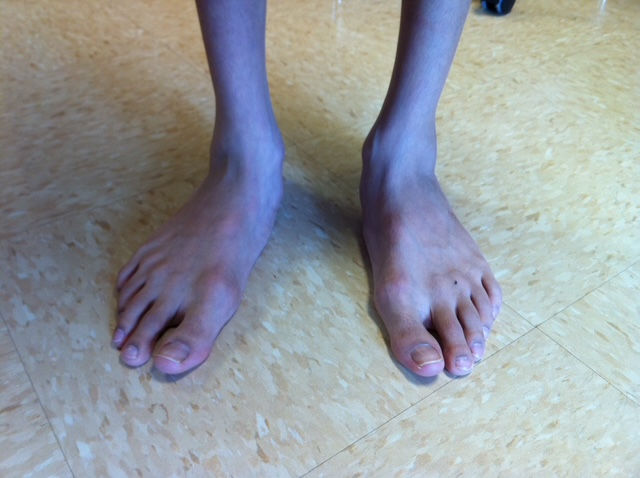
Contrillig the foot is about addressing the conerstone of the foot the heel bone (calcaneus). When the heel makes contact with the ground in gait it will tilt outward away from the midline of the body ( eversion) and unlock the midfoot and cause the foot to collapse inward (Pronation) . 75-80% of athletes pronate moderately and will have s mild arch on exam when weight bearing , As small % significantly pronate and will have flat feet , and another small % will have a high arch with minimal pronation. Each foot type has its own issues. Pronation can lead to pathologies such as : plantar fasciitis/ tendonitis / stress fractures / arthritis of foot and ankle / even proximal knee and hp issues. Congenital deformities like bunions / Hammertoes all have a root cause in pronation.

Tailored Performance for Every Athletic Pursuit
Engineered with precision biomechanics to optimize force transfer and minimize fatigue across all sports disciplines.

Endurance Runners
Maximum energy return and shock absorption designed for high-mileage stability and long-term joint protection.

Power Athletes
Instant arch stability and optimized force transfer for heavy lifts and explosive lateral channel movements.

Support & Recovery
Dynamic alignment technology to reduce training stress and significantly accelerate post-performance muscle recovery.
Dr c's shoe buying tips
1. When bending shoe from toe to heel it should only bend at the base of the toes. This means there is a shank in the shoe. Foot acts as a lever to move you throught space and the shoe should do the same
2. Stiff heel counter. Soft collapsible heel counters will not hold the heel in place .
3. wide to box with good volume to allow toes to spay
4. Running shoes are some of the best engineered shoes on the market. Most runners need a moderate pronation controlling shoe ( stability) , flat feet with significant pronation need a motion control shoe which will have denser foam on the inside of the heel like the stability level but will also have a plastic bridge embeded in the medial heel for further control. Very few need a neutral shoe with no pronation control and are usually more high arched .
5. Steel toe work boots will not have a shank in the arch of the sole and will decrease toe room . I often tell those who need work boots to get a good hiking boot that will have a shank in the sole , more breathable and can also be waterproof